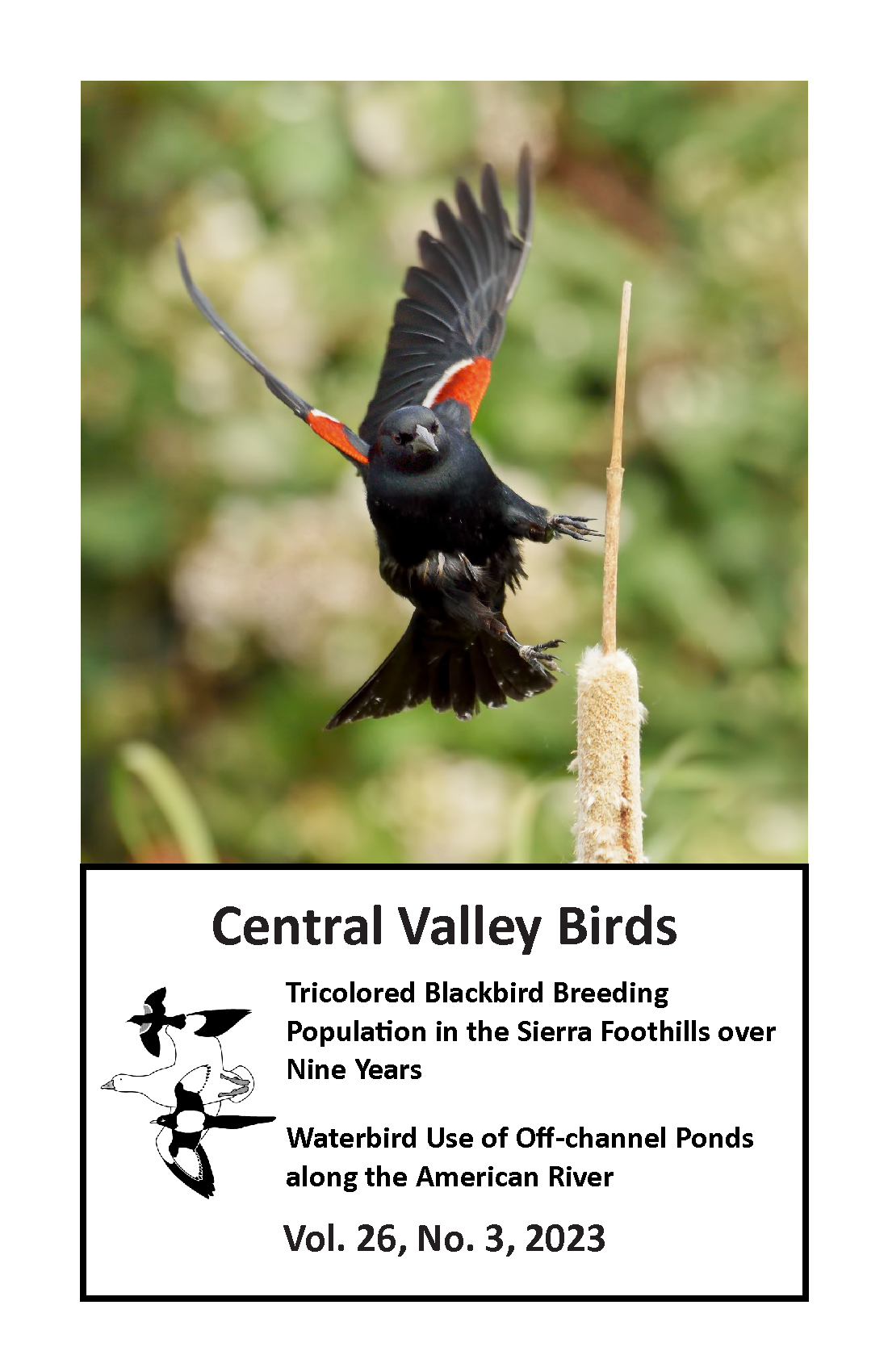
Breeding Population Status of the Tricolored Blackbird in the Foothills of the Central Sierra Nevada, 2014–2022
DOI:
https://doi.org/10.64555/tx0rgp62Keywords:
Agelaius tricolor, grassland, habitat, colonial, conservation, nestingAbstract
We report on Tricolored Blackbird (Agelaius tricolor) breeding surveys conducted from 2014 through 2022 in an eight-county area in the central Sierra Nevada foothills in California, including previously unpublished survey results from 2019, 2021, and 2022. The number of breeding colonies showed a slight, marginally significant decline, but the total number of breeding individuals did not decline over the study period, despite loss of habitat to development and conversion to unsuitable crops that eliminated some colonies. Numbers recorded in statewide surveys in April 2014, 2017, and 2022 varied substantially from the numbers of breeders we recorded over entire seasons in those years, illustrating the limitations of the statewide survey in assessing the species’ breeding population status within this region. The lack of a trend in breeders in the central Sierra foothills differs from the San Joaquin Valley and the statewide population, which both showed substantial recent increases. A possible explanation for the lack of a population trend is that numbers were below the habitat-based carrying capacity during early years of our study, due to substantial reproductive losses over many years in the San Joaquin Valley, a source for foothill nesting birds. The lack of an increase in the number of birds in the foothills after 2018, when the size of the population in the San Joaquin Valley and statewide increased substantially, suggests that the foothill population may have reached a limit imposed by available habitat. If so, results suggest that the size of the central Sierra foothills population may decline as habitat losses continue. We recommend continued monitoring of Tricolored Blackbird colonies and habitat losses in the foothill region and the conservation of colony sites and suitable foraging areas.