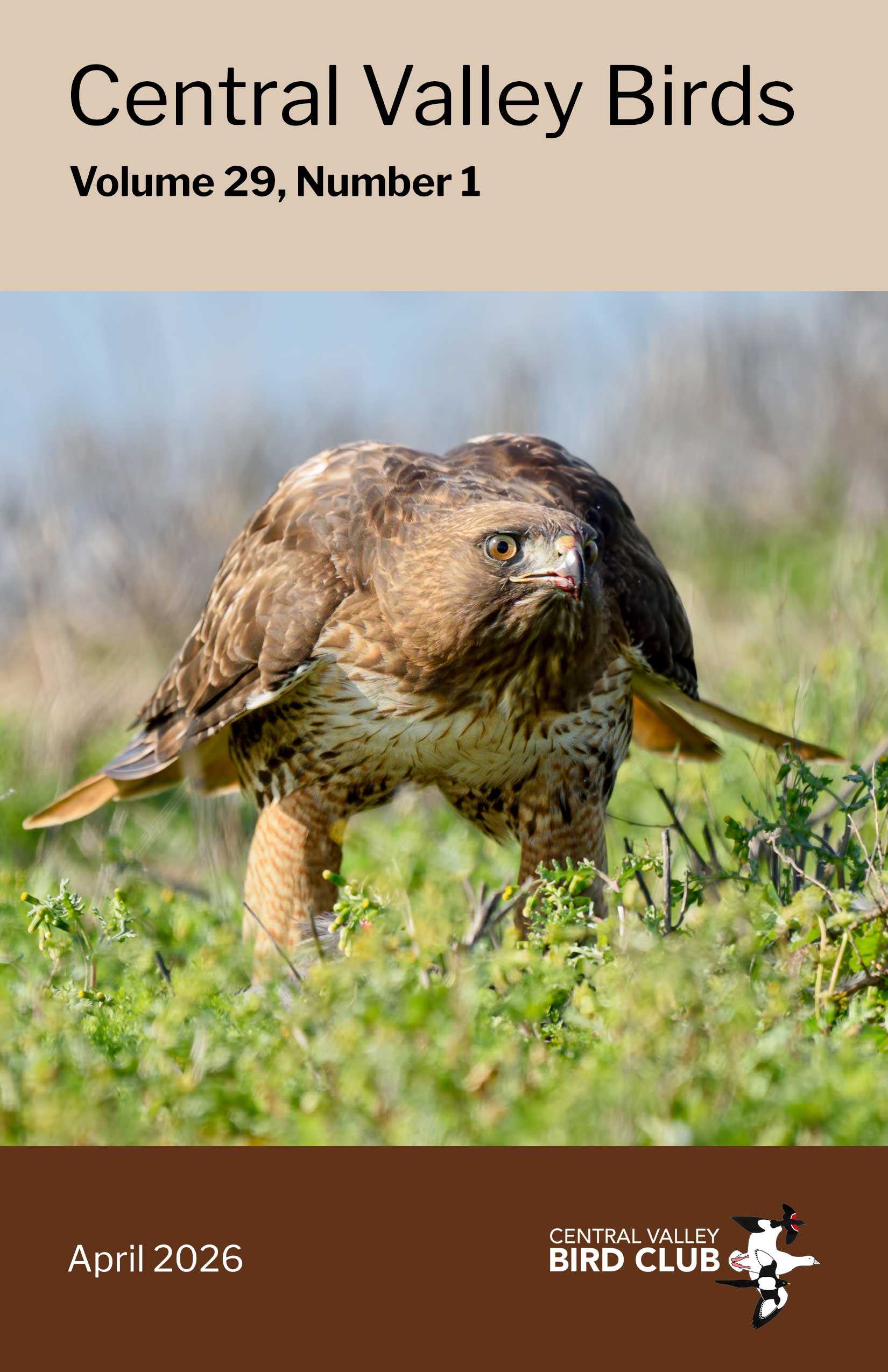
Ratios of Adults to Juveniles Vary by Land Cover for Red-tailed Hawks Wintering in California’s Central Valley
DOI:
https://doi.org/10.64555/zpw57m52Keywords:
Buteo jamaicensis, age-related habitat selection, age structure, intraspecific behaviorAbstract
We used data from a three-year study of raptor winter land cover associations throughout the Central Valley, and 14 years of year-round surveys along a transect (the Le Grand transect) in the Sierra Nevada foothills in eastern Merced and western Mariposa counties of California to compare relative winter abundance of adult and juvenile Red-tailed Hawks (Buteo jamaicensis) in various land cover types. We found that adult:juvenile ratios for Red-tailed Hawks were significantly greater in grassland, savanna, and rural residential land covers than in others covers. The ratios in most other land covers did not differ significantly from the overall ratio of approximately six to one. Two land cover types generally avoided by most Red-tailed Hawks (vineyards and orchards), showed significantly lower adult:juvenile ratios, while one cover type highly favored by the species (rice) also showed lower adult:juvenile ratios. Examining year-round data from the Le Grand transect, 90% of which occurs in grassland and oak savanna, we observed a pattern suggesting that juveniles vacate grassland/savanna areas in late summer and that the influx of wintering Red-tailed Hawks did not include more than a few juveniles. Several authors have suggested that juvenile Red-tailed Hawks are excluded from the highest quality habitats, presumably by resident and migrant adults. Our data showed significant differences in the distribution of adults and juveniles among land covers, but our results did not support the hypothesis that juveniles are generally excluded from the best habitats. We discuss implications of our findings with regard to mechanisms to explain this difference in distribution of adults and juveniles among land cover types.